In Doctrine and Covenants 59:23 we learn that, "he who doeth the works of righteousness shall receive his reward, even peace in this world, and eternal life in the world to come."
In the Guide to the Scriptures, under "Rest" we learn that rest is "the enjoyment of peace and freedom from worry and turmoil. The Lord has promised such rest to his faithful followers during this life."
In John 14:27, the Savior consoles, "Peace I leave with you, my peace I give unto you: not as the world giveth, give I unto you. Let not your heart be troubled, neither let it be afraid."
If we follow the Savior, we are entitled to feel peace. Sometimes that peace does not come automatically to me--I live a very busy life--but without fail, every time I have prayed to feel peace, it has come. That is a prayer that has always been answered immediately.
I find such reassurance that as followers of the Lord Jesus Christ, we are promised freedom from "worry and turmoil"--how cool is that? I wonder how often we draw upon this promise. I know that I indulge in feelings of worry and turmoil too often. Instead of looking heavenward, I look at my earthly situation and feel worried or stressed about various things. The Savior doesn't want me to worry. He wants me to exercise my faith in Him, and He wants to console me in my worries and fears. He wants me to look toward the future with confidence and hope. This is my privilege, if I but ask for it: peace in this world.
Monday, October 31, 2011

Thursday, December 23, 2010
A Glimpse at Bethlehem
Exactly six months ago I was in Bethlehem. It was a fabulous experience. I went to the Church of the Nativity, built over a grotto where tradition holds that Mary gave birth to Jesus. I went to the fields where the shepherds were that followed the star. And I had the opportunity to gain new insights from my professor about the birth of Christ. I want to share some of those insights with you.
The average age at time of betrothal was 12 or 13 for a girl in that day, so Mary was probably about that age. Joseph would have been around 17 years old. What amazing faith in such a young couple!
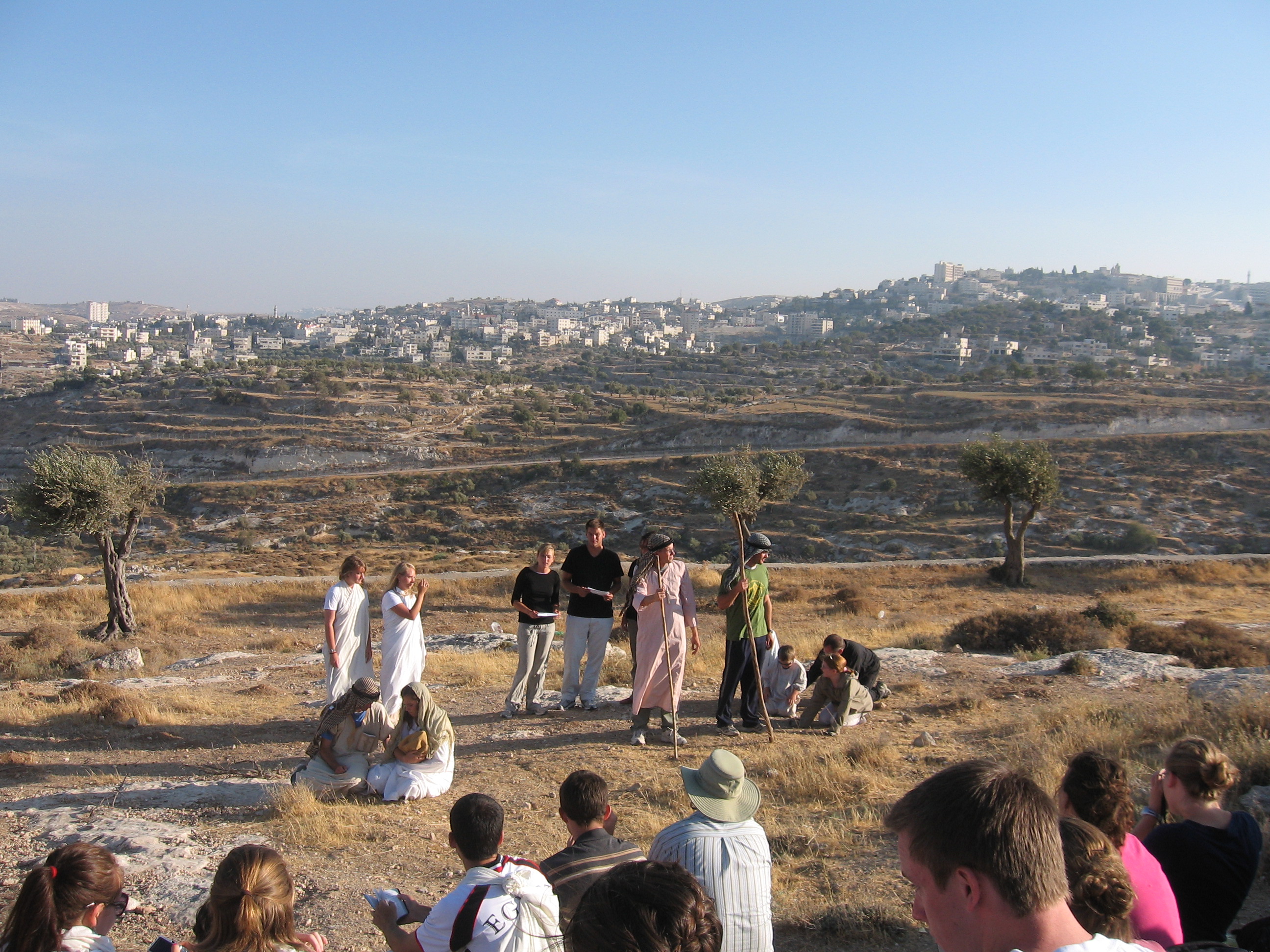
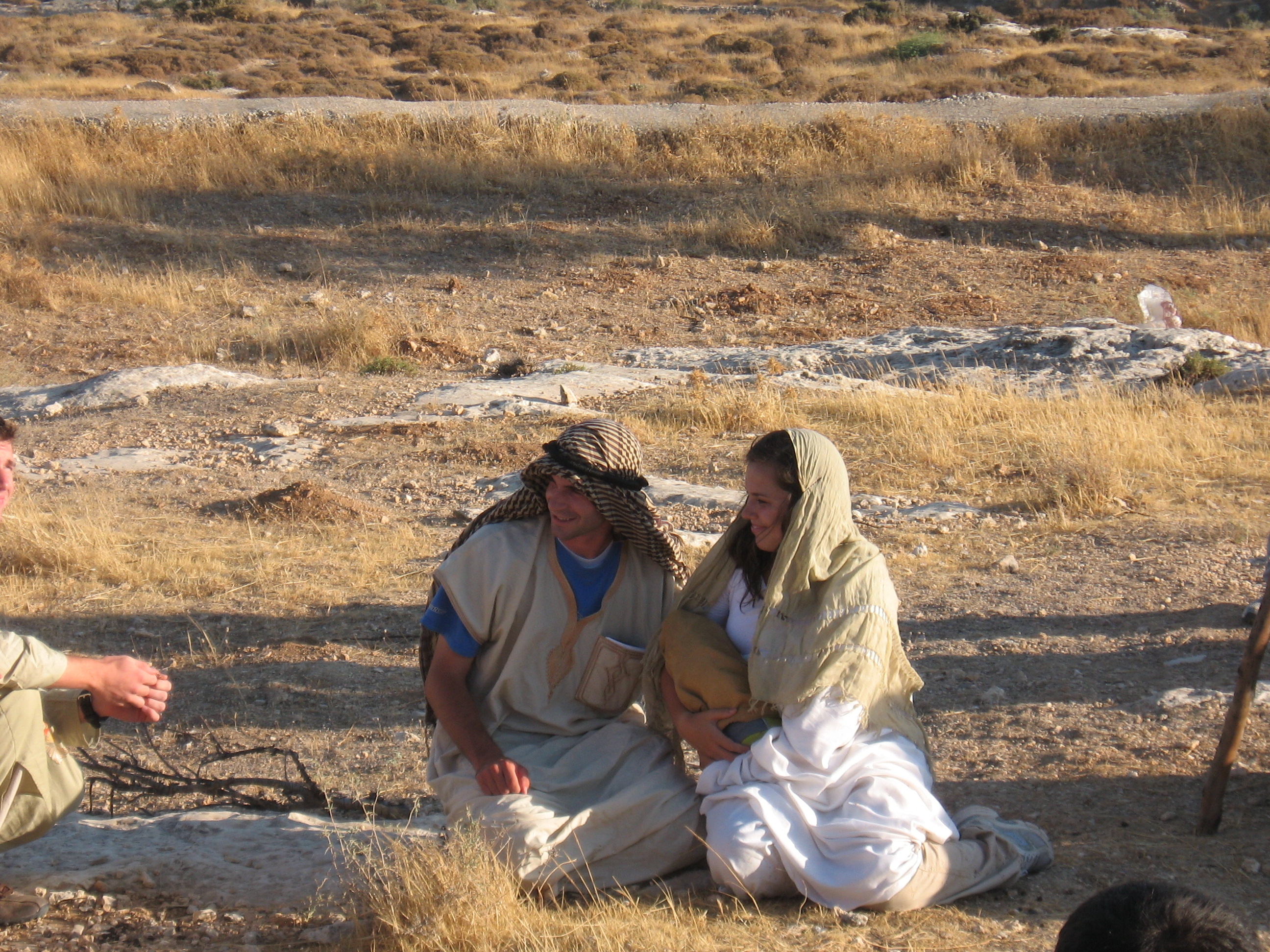
Inns had a large courtyard for animals, a lower level for cargo, and an upper level for people. This made them ideal for caravans passing the night. There was no room for Mary and Joseph in the inn (upper level), so they may have stayed in the lower level with the cargo and animals or they may have been in a grotto underneath a home. (the Church of the Nativity is built over such a grotto. It was one of the three churches established by Helena, mother of Constantine, who was supposed to erect churches for the most holy sites of Christendom. She would ask around and find out where tradition had it that these events occurred. So even though the church was built around 300AD, it was an important enough event that tradition would have been strong, and the location is probably within a few hundred yards of the real one) However, the greek term used here could also mean “guest room.”
It was normal for young boys to stay with the flocks (recall young David), so the fact that there were older men there that night is significant. They would only have been there because it was the time of birthing. The shepherds were Levites who had been looking for the Savior their whole lives. The lambs being birthed that night were destined for temple sacrifices, being a type and shadow of the sacrifice that Jesus would make 33 years later. This is my favorite insight I picked up about the birth of Christ.
That night there were only shepherds, though—the wise men came later. They were probably Persians, and could be of the Zoroastrian religion. The Bible Dictionary says that they could see the star when others could not (!) and found the young child later on. The three gifts are symbolic:
Item: Use: Symbolism:
Gold Royalty Son of God
Frankincense Used in temples Priesthood
Myrrh Used in burials Coming death
The items were also quite valuable. We see from the sacrifice (a pair of turtledoves or two young pigeons) that Mary and Joseph brought at Jesus’ circumcision that they were quite poor. It is possible that the gold, frankincense, and myrrh were sold to finance the Holy family’s flight to Egypt. I love the way that God takes care of people’s material needs!

Anyway, I hope these insights and pictures help you to picture the Nativity this CHRISTmas season. I love being able to picture the spot in my mind, and I love knowing the deeper significance of certain things.
Thursday, December 9, 2010
The Beautiful Parodox of Love
My friend, Jenna Kimble, wrote a song, and one particular line caught my attention: "And each time I give away my heart, there's room for more love, whether to give or receive...room for more love."
It's amazing! You would think that you would have less capacity to love after giving away pieces of your heart...but somehow my ability to love is always replenished. Giving love away doesn't diminish it. Somehow it's always filled back up.
I have found this to be true in a variety of situations. For example, on my mission I never stayed any place very long: 6 weeks to 3 months tops. So I routinely gave my heart away to people, and then had to leave them. It was painful! But whenever I went to a new place, I was able to love them just as well. The old people still held a piece of my heart, but I still had a full heart to give to the new people. And since I've come back, I've been amazed at my ability to love people here, even though I felt that I'd left my heart in Brasil. Now I feel like I left half my heart in Jerusalem and half my heart in Brasil; yet I still have a full heart to give to my 28 students!
Somehow I've picked up the ideal that choosing to love is never a bad choice. I don't know if someone taught me that or if it was from a catchy quote, or what...but somehow it entered into my ideology. Choosing to love is never wrong. And in my stage of life, living by this adage can be painful! Sometimes I give my heart to someone and then they decide they don't want it, and it takes a while for me to regain ownership of my own heart. But when I do, I always find that there is room for more love: more love to give and more to receive. And I'm always better for it. Even though it hurts, I've never regretted loving somebody.
I wonder if this is part of our divine heritage. I was listening to President Uchtdorf's talk on love this morning on my way to work, and he was talking about how we inherited the ability to love from our Father, who is all-loving. I think this is part of the miracle of love: that no matter how much of it we give away, the supply is always replenished. There's room for more love.
p.s. Jenna's song is amazing, and it is available on i-tunes. It's called "Bring on the Rain."
It's amazing! You would think that you would have less capacity to love after giving away pieces of your heart...but somehow my ability to love is always replenished. Giving love away doesn't diminish it. Somehow it's always filled back up.
I have found this to be true in a variety of situations. For example, on my mission I never stayed any place very long: 6 weeks to 3 months tops. So I routinely gave my heart away to people, and then had to leave them. It was painful! But whenever I went to a new place, I was able to love them just as well. The old people still held a piece of my heart, but I still had a full heart to give to the new people. And since I've come back, I've been amazed at my ability to love people here, even though I felt that I'd left my heart in Brasil. Now I feel like I left half my heart in Jerusalem and half my heart in Brasil; yet I still have a full heart to give to my 28 students!
Somehow I've picked up the ideal that choosing to love is never a bad choice. I don't know if someone taught me that or if it was from a catchy quote, or what...but somehow it entered into my ideology. Choosing to love is never wrong. And in my stage of life, living by this adage can be painful! Sometimes I give my heart to someone and then they decide they don't want it, and it takes a while for me to regain ownership of my own heart. But when I do, I always find that there is room for more love: more love to give and more to receive. And I'm always better for it. Even though it hurts, I've never regretted loving somebody.
I wonder if this is part of our divine heritage. I was listening to President Uchtdorf's talk on love this morning on my way to work, and he was talking about how we inherited the ability to love from our Father, who is all-loving. I think this is part of the miracle of love: that no matter how much of it we give away, the supply is always replenished. There's room for more love.
p.s. Jenna's song is amazing, and it is available on i-tunes. It's called "Bring on the Rain."
Thursday, December 2, 2010
The Beginning of the Rest of My Life
I had an epiphany the other day that I want to attempt to put in the words.
You see, when I was a child, I was very me-centered. I feel like my focus/perspective gradually widened to include family and friends and maybe a little bit of the world as I grew up and went to school. Yet I was still quite self-centered. In college, as much as I would've liked to think that I wasn't, my focus was still on me. I got a brief taste of other-centeredness when I served as a missionary, and it felt like a breath of fresh air to not just be focused on me all the time.
Right now I'm entering a new phase of life--instead of studying, I have started my career as a school teacher! I spend probably 14 hours a day actively preparing to teach and teaching 28 ten and eleven year-olds. I'm constantly thinking about how to teach and help them. Even when I'm not at school, they're on my mind. At Thanksgiving, when I was "resting", I was thinking about them. When I can't sleep at night, my mind goes to them. Sometimes I wonder if it's unhealthy, but I'm constantly thinking about my "kids."
At times I feel overwhelmed/frustrated and want to have time for me. I expressed that feeling to my mom, who is also a school teacher. She said something to the effect of, "Well, Sabrina, just wait until you're a mother! It's going to be like this but more so." At the moment, that thought overwhelmed me even more, and I wondered if I would be able to do the whole motherhood thing. But I've been thinking about the concept ever since.
I wonder if life is a gradual opening of our perspective from self to others. I wonder if our experiences and progression from school to career to family is supposed to be a path to being other-centered. My career makes me think of others all the time, but I DO still have time to think about myself. But then I'm going to get married and have a husband to think about and care for...and then children! I could be selfish and think of this as a negative thing (indeed that is the message that the world is telling women), or I could have an eternal perspective and think of this as an exciting part of my progression--to becoming what I am supposed to become. It makes me think of the progression beyond the grave... my goal is to become as Heavenly Father and thus have infinite posterity. I will have tons of spirit children to be thinking about all the time. Does God think of himself very often? I think he spends all of his time being concerned with the eternal life of his children. It is an endless process of becoming less concerned with self and more concerned with others. And in losing ourselves, we will find ourselves. So I think that me being wrapped up with my 28 kiddos is the humble beginning of a long journey to being completely, happily other-centered.
You see, when I was a child, I was very me-centered. I feel like my focus/perspective gradually widened to include family and friends and maybe a little bit of the world as I grew up and went to school. Yet I was still quite self-centered. In college, as much as I would've liked to think that I wasn't, my focus was still on me. I got a brief taste of other-centeredness when I served as a missionary, and it felt like a breath of fresh air to not just be focused on me all the time.
Right now I'm entering a new phase of life--instead of studying, I have started my career as a school teacher! I spend probably 14 hours a day actively preparing to teach and teaching 28 ten and eleven year-olds. I'm constantly thinking about how to teach and help them. Even when I'm not at school, they're on my mind. At Thanksgiving, when I was "resting", I was thinking about them. When I can't sleep at night, my mind goes to them. Sometimes I wonder if it's unhealthy, but I'm constantly thinking about my "kids."
At times I feel overwhelmed/frustrated and want to have time for me. I expressed that feeling to my mom, who is also a school teacher. She said something to the effect of, "Well, Sabrina, just wait until you're a mother! It's going to be like this but more so." At the moment, that thought overwhelmed me even more, and I wondered if I would be able to do the whole motherhood thing. But I've been thinking about the concept ever since.
I wonder if life is a gradual opening of our perspective from self to others. I wonder if our experiences and progression from school to career to family is supposed to be a path to being other-centered. My career makes me think of others all the time, but I DO still have time to think about myself. But then I'm going to get married and have a husband to think about and care for...and then children! I could be selfish and think of this as a negative thing (indeed that is the message that the world is telling women), or I could have an eternal perspective and think of this as an exciting part of my progression--to becoming what I am supposed to become. It makes me think of the progression beyond the grave... my goal is to become as Heavenly Father and thus have infinite posterity. I will have tons of spirit children to be thinking about all the time. Does God think of himself very often? I think he spends all of his time being concerned with the eternal life of his children. It is an endless process of becoming less concerned with self and more concerned with others. And in losing ourselves, we will find ourselves. So I think that me being wrapped up with my 28 kiddos is the humble beginning of a long journey to being completely, happily other-centered.
Monday, November 15, 2010
R-E-S-P-E-C-T: find out what it means to me
I've been pondering about respect for YEARS! Like in my previous post, I realized that my family had something that that wasn't exactly common, so I wanted to figure out how it happened. The thing is, I'm the 5th kid of 6...so the atmosphere of my family was definitely already established before I was born. I didn't get to see how my parents started it, and I knew that I wanted to cultivate similar respect in my future family and wanted to understand how it was created. I thought about it, though, and I came up with a few things my parents did to establish an atmosphere of respect. Then I want to talk about another family's example of respect, and then finish with respect in my classroom.
Here are things my parents do that I think contributes to the high-respect level in my family:
1. They show respect for each other at all times (literally, I don't think I have ever seen them disrespect each other)
2. If they ever do/say something that hurts our feelings, they apologize to us (I don't know if you've ever had one of your parents apologize to you, but it's a humbling, gratifying experience that definitely built my respect for them)
3. They demand that we show respect for each of them. Pretty much the worst thing you could do in our family is disrespect one of our parents, in which case, the other parent would come and have a serious talk with you, and you would never want to do it ever again. At least, I didn't.
4. They each express appreciation for the other to us, when the other one isn't there. I can't count the times that Mom, when Dad wasn't there, told us how much she loves Dad and how grateful she is for everything he is and does. Dad does the same, talking about Mom to us. This is reassuring as a child, and it also built our respect for them.
5. It's just the unspoken expectation that everyone knows. I can't imagine back-talking my parents or speaking to them with an attitude; I really can't. It would be such a cultural faux-paux.
So figuring out those things helped me get an idea of how an atmosphere of respect was created, at least in one situation. Then I found another family that has a high amount of respect for each other. It's the family of one of my Relief Society ladies back home. She's 30-something and has 3 kids. And I was struck by how much respect she has for her kids! In turn, they respect her and each other, and the family has an easy, comfortable feel to it. I asked her about it once. She said that she shows her kids respect. I asked her how, and she said something that I consider to be profound. She said, "Mostly by listening to them." That's it! It seemed too simple, so I watched her, and I noticed that when her 2 year old daughter wanted her to see/watch something or listen to her, my friend gave her her full attention. She zoomed in on that baby when many mothers would be like "yeah, uh huh, that's cool." But even at that young age, she showed her baby the respect that if she (the baby) thought it was important, she (the mother) would esteem it as important. Kind of like a certain other Being I know and admire... :)
Finally I have had the opportunity to practice what I've learned. Three months ago I started teaching 5th grade. I thought a lot about the kind of atmosphere I wanted to create, and I had an idea of how to create it, but not really. So I did the best I could, and the first weeks were a whirlwind, and now I'm finally at a place where I have time to reflect. When I've been observed by the higher-ups, the first thing they always say is, "I like the feeling-tone in your classroom" or "I love the atmosphere you've created." Something to that effect. So I thought about it, and I think I've been largely successful in accomplishing what I wanted to in that area (I say this not to brag, but to figure out how it happened). My students respect me, I respect them, and they are generally kind to each other. Our classroom feels peaceful, calm, and relaxed. We work, we laugh, we play. It's just good. So I have been thinking about what I did that made it that way (and I believe that I am only responsible for half of this result...the other half came from the students themselves). Here's what I came up with:
1. Four out of our 5 class rules have to do with respect: Show RESPECT for yourself, Show RESPECT for your peers, Show RESPECT for your teacher, and Show RESPECT for the school.
2. I do my best to show respect for them. I pay attention to them when they talk, when I'm helping a child I am completely focused on him/her, I try not to call them out or embarrass them, and I respect their ideas. I try really hard to incorporate democracy into our classroom, letting them voice their ideas and concerns and then voting on what we should do about them. They know that I care about their ideas. For example, although I presented the class rules, they came up with the consequences themselves. At least once a week, a student will bring something up and we will vote on it as a class. It is not a dictatorship. I try be authoritative but not authoritarian. They have say in how our classroom runs.
3. I require them to show respect to each other. If a student is making a comment and others are talking at the same time, I tell the student to wait until his classmates are showing him respect. And I use the word respect. I try to encourage kindness by keeping a bucket where students write the kindnesses that their peers are showing them, and we read the papers aloud at our class meetings.
4. If we have an issue, we discuss it. The other week I was noticing a few hurtful comments being exchanged by members of our class, and I brought it up at our class meeting. We discussed it and resolved to do better.
5. My students know that what makes me most proud is to hear that my students are kind and respectful when I'm not there; what makes me most disappointed is when they are disrespectful.
So I feel like I'm more prepared to create an atmosphere of respect in my future family, recognizing the contributing factors in the three situations above. And I think that the bottom line is this: to get respect you have to show it.
What do you think? Are there other factors that you've noticed? How do YOU establish respect?
Here are things my parents do that I think contributes to the high-respect level in my family:
1. They show respect for each other at all times (literally, I don't think I have ever seen them disrespect each other)
2. If they ever do/say something that hurts our feelings, they apologize to us (I don't know if you've ever had one of your parents apologize to you, but it's a humbling, gratifying experience that definitely built my respect for them)
3. They demand that we show respect for each of them. Pretty much the worst thing you could do in our family is disrespect one of our parents, in which case, the other parent would come and have a serious talk with you, and you would never want to do it ever again. At least, I didn't.
4. They each express appreciation for the other to us, when the other one isn't there. I can't count the times that Mom, when Dad wasn't there, told us how much she loves Dad and how grateful she is for everything he is and does. Dad does the same, talking about Mom to us. This is reassuring as a child, and it also built our respect for them.
5. It's just the unspoken expectation that everyone knows. I can't imagine back-talking my parents or speaking to them with an attitude; I really can't. It would be such a cultural faux-paux.
So figuring out those things helped me get an idea of how an atmosphere of respect was created, at least in one situation. Then I found another family that has a high amount of respect for each other. It's the family of one of my Relief Society ladies back home. She's 30-something and has 3 kids. And I was struck by how much respect she has for her kids! In turn, they respect her and each other, and the family has an easy, comfortable feel to it. I asked her about it once. She said that she shows her kids respect. I asked her how, and she said something that I consider to be profound. She said, "Mostly by listening to them." That's it! It seemed too simple, so I watched her, and I noticed that when her 2 year old daughter wanted her to see/watch something or listen to her, my friend gave her her full attention. She zoomed in on that baby when many mothers would be like "yeah, uh huh, that's cool." But even at that young age, she showed her baby the respect that if she (the baby) thought it was important, she (the mother) would esteem it as important. Kind of like a certain other Being I know and admire... :)
Finally I have had the opportunity to practice what I've learned. Three months ago I started teaching 5th grade. I thought a lot about the kind of atmosphere I wanted to create, and I had an idea of how to create it, but not really. So I did the best I could, and the first weeks were a whirlwind, and now I'm finally at a place where I have time to reflect. When I've been observed by the higher-ups, the first thing they always say is, "I like the feeling-tone in your classroom" or "I love the atmosphere you've created." Something to that effect. So I thought about it, and I think I've been largely successful in accomplishing what I wanted to in that area (I say this not to brag, but to figure out how it happened). My students respect me, I respect them, and they are generally kind to each other. Our classroom feels peaceful, calm, and relaxed. We work, we laugh, we play. It's just good. So I have been thinking about what I did that made it that way (and I believe that I am only responsible for half of this result...the other half came from the students themselves). Here's what I came up with:
1. Four out of our 5 class rules have to do with respect: Show RESPECT for yourself, Show RESPECT for your peers, Show RESPECT for your teacher, and Show RESPECT for the school.
2. I do my best to show respect for them. I pay attention to them when they talk, when I'm helping a child I am completely focused on him/her, I try not to call them out or embarrass them, and I respect their ideas. I try really hard to incorporate democracy into our classroom, letting them voice their ideas and concerns and then voting on what we should do about them. They know that I care about their ideas. For example, although I presented the class rules, they came up with the consequences themselves. At least once a week, a student will bring something up and we will vote on it as a class. It is not a dictatorship. I try be authoritative but not authoritarian. They have say in how our classroom runs.
3. I require them to show respect to each other. If a student is making a comment and others are talking at the same time, I tell the student to wait until his classmates are showing him respect. And I use the word respect. I try to encourage kindness by keeping a bucket where students write the kindnesses that their peers are showing them, and we read the papers aloud at our class meetings.
4. If we have an issue, we discuss it. The other week I was noticing a few hurtful comments being exchanged by members of our class, and I brought it up at our class meeting. We discussed it and resolved to do better.
5. My students know that what makes me most proud is to hear that my students are kind and respectful when I'm not there; what makes me most disappointed is when they are disrespectful.
So I feel like I'm more prepared to create an atmosphere of respect in my future family, recognizing the contributing factors in the three situations above. And I think that the bottom line is this: to get respect you have to show it.
What do you think? Are there other factors that you've noticed? How do YOU establish respect?
The Supreme Importance of "Thank You"
I don't consider myself to be a very observant person, but I have observed something about the importance of saying "thank you" in relationships.
I started observing this as a teenager. I noticed that my parents say "thank you" to each other ALL the time! Dad says "thank you" for dinner. Mom says "thank you" when Dad takes care of the yard. They don't just say thank you for the unusual, extraordinary things--they express gratitude for the other person simply doing what's expected of them! Just the ordinary, everyday responsibilities! And they don't just thank each other, they thank us, too. And you know what? When someone tells me thank you for fulfilling my normal responsibilities, it makes me want to keep doing them. It makes me want to do them better, and it makes me happier while I'm doing them. Another funny thing is, my parents "help" each other notice things they should thank each other for. "Did you notice that I waxed the floor?" Dad asks Mom, who immediately thanks him not only for waxing the floor but also for helping her notice! It's kind of ridiculous in one sense, but in another I think it shows something simple and beautiful about their relationship--they trust that the other person would want to express gratitude, and instead of being upset that he/she didn't notice, they help each other out by saying something.
So in high school I started noticing how cool/unusual it was that my parents say "thank you" all the time...and then I started seeing relationships where that wasn't the case. I saw other marriages, friendships, relationships, and families that hardly ever say thank you...even when it would normally be expected. And I noticed a huge difference. There was more tension, dissatisfaction, and conflict. Of course, I realize that there could be a zillion other factors, but I think that frequency of saying "thank you" (sincerely) is a huge indicator of success in relationships. It is something that I plan on doing. Often.
Thanks for reading. :)
I started observing this as a teenager. I noticed that my parents say "thank you" to each other ALL the time! Dad says "thank you" for dinner. Mom says "thank you" when Dad takes care of the yard. They don't just say thank you for the unusual, extraordinary things--they express gratitude for the other person simply doing what's expected of them! Just the ordinary, everyday responsibilities! And they don't just thank each other, they thank us, too. And you know what? When someone tells me thank you for fulfilling my normal responsibilities, it makes me want to keep doing them. It makes me want to do them better, and it makes me happier while I'm doing them. Another funny thing is, my parents "help" each other notice things they should thank each other for. "Did you notice that I waxed the floor?" Dad asks Mom, who immediately thanks him not only for waxing the floor but also for helping her notice! It's kind of ridiculous in one sense, but in another I think it shows something simple and beautiful about their relationship--they trust that the other person would want to express gratitude, and instead of being upset that he/she didn't notice, they help each other out by saying something.
So in high school I started noticing how cool/unusual it was that my parents say "thank you" all the time...and then I started seeing relationships where that wasn't the case. I saw other marriages, friendships, relationships, and families that hardly ever say thank you...even when it would normally be expected. And I noticed a huge difference. There was more tension, dissatisfaction, and conflict. Of course, I realize that there could be a zillion other factors, but I think that frequency of saying "thank you" (sincerely) is a huge indicator of success in relationships. It is something that I plan on doing. Often.
Thanks for reading. :)
Sunday, November 14, 2010
How the Atonement Heals Emotional Wounds, Part II
So every once in a while I like to reread my old blog posts. Especially the ones from before my mission, because I had these epiphanies back then and sometimes I forget that I even had them. So it's good to remember. And the other day I saw my old post about how the Atonement of Jesus Christ heals emotional wounds, which was really a new concept to me at the time, because I mostly thought about the Atonement in the context of paying the price of sin. I have learned much since then.
Two weeks ago, one of the apostles, Elder Hales, came and spoke to us. He touched on a variety of subjects, but one of the stories he told stood out to me. He told about a young man he knew that came to see him. The young man had just broken up with his girlfriend or fiance, and was pretty depressed. He thought his life was horrible. Elder Hales had just spoken with several people before him that had much worse situations, but he listened to this young man for an hour, sympathetically. Then he told me to get on his knees and tell Heavenly Father everything he was grateful for. "Take an hour or two! However long it takes!" he told him, "until you are filled with His love and your pain is gone." What a remarkable concept is revealed in that advice! Recognizing what Heavenly Father has done/is doing in our lives opens us up to feel His love for us, and allows the Atonement to take our pain away! I've always loved the quote in Preach My Gospel about how the Atonement heals anything that is "unfair" in our lives, and I think this shows a little of HOW that happens. I love the universal applications of the Atonement! I am so glad that there is a way to become whole and be healed. I love Jesus Christ, and I'm grateful for the effects of His Atonement in my life.
Two weeks ago, one of the apostles, Elder Hales, came and spoke to us. He touched on a variety of subjects, but one of the stories he told stood out to me. He told about a young man he knew that came to see him. The young man had just broken up with his girlfriend or fiance, and was pretty depressed. He thought his life was horrible. Elder Hales had just spoken with several people before him that had much worse situations, but he listened to this young man for an hour, sympathetically. Then he told me to get on his knees and tell Heavenly Father everything he was grateful for. "Take an hour or two! However long it takes!" he told him, "until you are filled with His love and your pain is gone." What a remarkable concept is revealed in that advice! Recognizing what Heavenly Father has done/is doing in our lives opens us up to feel His love for us, and allows the Atonement to take our pain away! I've always loved the quote in Preach My Gospel about how the Atonement heals anything that is "unfair" in our lives, and I think this shows a little of HOW that happens. I love the universal applications of the Atonement! I am so glad that there is a way to become whole and be healed. I love Jesus Christ, and I'm grateful for the effects of His Atonement in my life.
Subscribe to:
Posts (Atom)